
Share Philip Norman Hablutzel's obituary with others.
Invite friends and family to read the obituary and add memories.
Stay updated
We'll notify you when service details or new memories are added.
You're now following this obituary
We'll email you when there are updates.
Select your format and elements to print

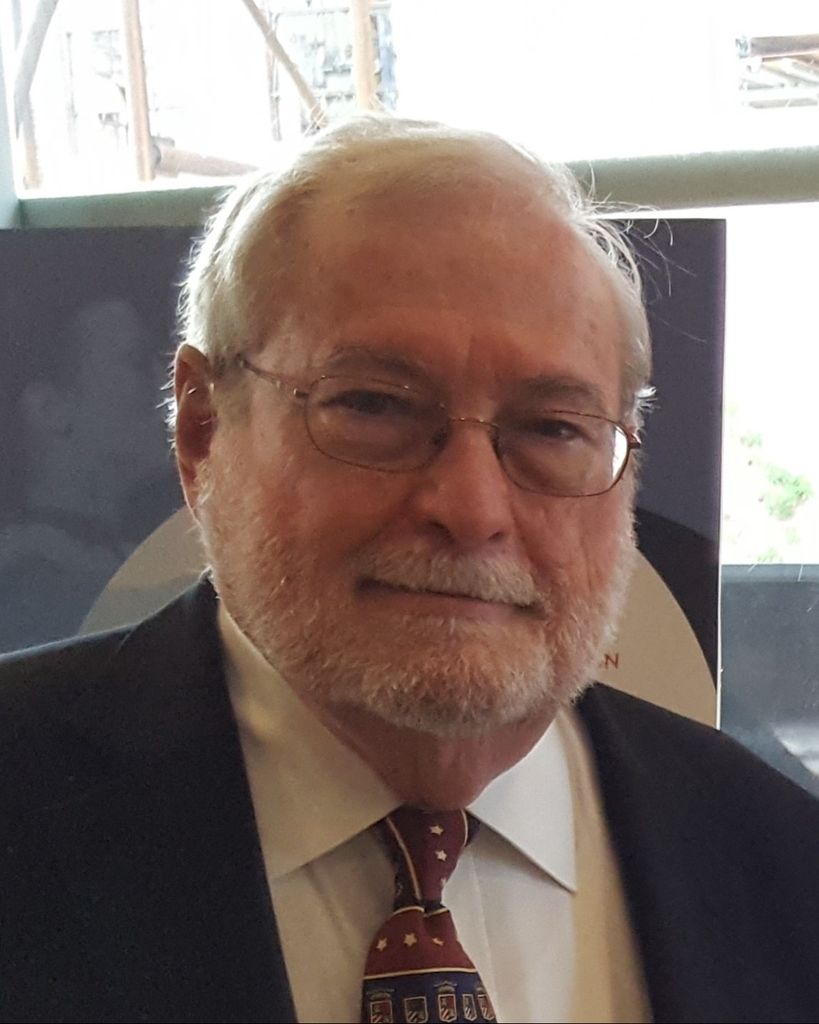
Philip Norman Hablutzel
Aug 23, 1935 — Jan 6, 2026
Durham, NC
Philip Norman Hablutzel was born in Flagstaff, Arizona, on August 23, 1935, and died peacefully in Durham, North Carolina on January 6, 2026, holding the hand of his beloved wife Nancy (née Zimmerman). Between those dates he became an internationally-recognized expert in international finance; co-drafted model and Illinois laws; and helped to found the Chicago School of Professional Psychology and a graduate program in financial services law at the Chicago-Kent College of Law.
Phil received a commission upon high school graduation from Kemper Military School in Boone, Missouri, but a congenital heart condition prevented him from serving. He received a bachelor’s degree in Physics (under Arts & Sciences) from Louisiana State University, serving as President of the College of Physics and Chemistry in 1956. He also was President of his fraternity, Phi Gamma Delta, and of the honor societies Alpha Phi Omega (service) and Tau Kappa Alpha (public speaking). Phil was on the Interfraternity Council, serving as Secretary; a member of Phi Eta Sigma, recognizing freshmen for outstanding scholastic achievement; the Student Senate and Student Honor Council; the University Debate Squad; and other organizations. Additional honors included Omicron Delta Kappa, the men’s national leadership honor society, for multiple years including as President of the LSU Chapter, and he was invited twice to Who’s Who in American College and University Students. Phil became a Golden Tiger in 2008.
After studying both Philosophy and Law at the University of Heidelberg (learning fluent German in the process) he returned to the United States and received a Master’s degree in Political Science from the University of Chicago. He then moved to the law school where he was part of their storied Class of 1967, classmate of John Ashcroft; William J. Bowe, general counsel of Encyclopedia Britannica; Lester Munson, well-known sports analyst and commentator; Sir Geoffrey Palmer, former prime minister of New Zealand; and Roberta Ramo, the first female president of the American Bar Association; among others. In his final year, Phil was President of the still-new Edwin F. Mandel Legal Aid Association, representing the students who participated in the University of Chicago Law School’s Edwin F. Mandel Legal Aid Clinic – where he learned that he did not like criminal law.
After graduating Phil worked at the American Bar Foundation for four years before finding his true calling as a law professor at Chicago-Kent College of Law, part of the Illinois Institute of Technology. He was known for teaching some of the most difficult courses, including Banking Law, Business Torts, Commercial Law, Corporations (later called Business Organizations), International Capital Markets, International Commercial Arbitration, Money Laundering, Not-for-Profit Law, School Law, Securities Regulation, and Trust Law. Some of these he adapted when he founded the Graduate Program in Financial Services Law, serving as its Director from 1985-1996 and overseeing a team of adjunct professors in a course covering the different insolvency/bankruptcy regimes for banks, insurance companies, pension funds, brokerage firms, etc. For over thirty-five years, he was the faculty sponsor for Chicago-Kent’s Annual Conference on Not-For-Profit Organizations, frequently presenting a lecture or workshop during the conference.
Phil also served as Director of the Institute of Illinois Business Law, the successor to the Illinois Secretary of State's Corporation Acts Advisory Committee, beginning in 2006 when it moved to Chicago-Kent, and was its Chair 2016-2018. He had previously served as Reporter (1986 – 1989) and Member (1989 - July 2005) of the Advisory Committee. Occasionally he indulged his love of the classics with seminars on Ancient Greek Law, Medieval English Legal History, Roman Law, and Kant. Phil retired from full-time teaching to emeritus status in 2016.
During his career, Chicago-Kent sent him as an international exchange teacher to China, Germany, Thailand, and the United Kingdom, and he was a Senior Fulbright Professor in Mainz, Germany, in 1993. For eight years he led a team from Chicago-Kent to the Willem Vis International Commercial Arbitration Moot Competition in Vienna, Austria, also serving as an Arbitrator (judge) for seven of those years. Phil also participated in conferences in the USA and abroad, including presentations to international audiences in Argentina, Bolivia, China, Germany, Spain, Thailand, Ukraine, and the United Kingdom.
Phil authored or co-authored numerous books, including a two-volume treatise on International Banking Law (Clark Boardman Callaghan, November, 1994) plus its 1996 and 1997 Supplements; the Second Edition of the Model Business Corporation Act Annotated (West Publications, 1944), and the Model Residential Landlord-Tenant Code (American Bar Foundation, 1969), which became the Uniform Residential Landlord and Tenant Act of 1972. It has been adopted by 21 states and some cities, and Phil received an award for his work on the Act from the University of Iowa in 2017.
Among his book chapters and articles are “Dissociation: Mandatory Liquidation or Mandatory Buyouts of Partnerships,” Chapter 6, Vol. II, Business Law Series, 2005 Illinois Institute of Continuing Education (Spring, 2005), with revisions in 2008 and 2011; Symposium on Derivative Financial Products, 71 Chi-Kent L. Rev. 1043 (1996). Symposium Editor and author of Forward: On the Borderlands of Derivatives: Rocket Science For the Next Millennium; May an Attorney in Illinois Be a Trustee?, 83 Ill. B.J. 22 (1995); British Banks' Role in U.K. Capital Markets Since the Big Bang, 68 Chi.-Kent L. Rev. 365 (1992); Hostile Corporate Takeovers: History and Overview, the lead Article in Symposium on State Corporate Anti-Takeover Legislation, 8 N. Ill. U.L. Rev. 203 (1988) (co-authored); State Regulation of Branch Banking, 16 Duq. L. Rev. 679-737. (1979); and Foreign Banks in the United States After the International Banking Act of 1978: The New Dual System (co-author), 96 Banking L.J. 133-153 (Feb. 1979). He was very active in the Chicago Bar Association, Illinois State Bar Association, and American Bar Association.
Phil helped draft both model U.S. laws and several laws for Illinois. Among the national work was as Liaison to National Conference of Commissioners on Uniform State Laws (NCCUSL) for the Drafting Committee on Uniform Limited Liability Partnership Act (ULLPA), 1995-1996, and for the Model Acts noted above.
In Illinois he was widely recognized for his work on numerous legislative task forces. These included the Illinois Joint Task Force on adoption of Uniform Limited Liability Company Act (ULLCA), Revised Uniform Partnership Act (RUPA), Uniform Unincorporated Nonprofit Association Act (UUNAA), and the Uniform Limited Liability Partnership Act (ULLPA), 1994-1997. He participated in several Illinois Joint Task Forces revising portions of acts, including the "Alternative Remedies" section of the Business Corporation Act (effective August, 1995), 1993-1995; and drafting revisions in state corporate take-over provisions (effective August 2, 1989), 1985-1989.
Phil was a Member of the Subcommittee on Limited Liability Companies, 1990-1997 which resulted in the first Illinois Limited Liability Companies Act becoming law in September, 1992 (effective Jan. 1, 1994) and later for the revised Act based on ULLCA (effective January 1, 1998). He was also a Member of the Committee to Revise Illinois LLC Act, co-drafting the amendments that became effective July 1, 2017, and a Member of the Committee to Revise Illinois Business Corporation Act, November, 2017 to December 2020. Phil was Co-Chair of the Subcommittee to draft a Business Trust statute for Illinois beginning in 2010, work that was incomplete (due to factors outside his control) at the time of his death.
His best-known work was as Reporter to Illinois Secretary of State's Advisory Subcommittee on Not-For-Profit Law, which rewrote the Illinois Not-for-Profit Corporation Act, 1984-1987. This made Phil one of the state’s most knowledgeable persons in nonprofit organizations. Some years later he joined his wife’s firm, Hablutzel & Associations, as of counsel to advise a number of their clients, and she frequently assured people that there was no nepotism involved; he was there as the smartest person in the state on that topic.
Phil also held non-legal roles, including on two condominium association boards for a total of eleven years, four of them as President, and a Michigan home owners association. He completed the FBI's Citizens Academy in 2008. Phil was the Founding President of the Chicago School of Professional Psychology, 1979-1983, leading them from establishment through seven various accreditation processes as well as serving as the attorney prior to the opening of the School.
He was extremely proud to serve as a Public Member of the Business Conduct Committee of the Chicago Board Options Exchange from February 2004, until his death.
It was while teaching at Chicago-Kent College of Law that he met Nancy, a special education teacher and professor at Loyola University of Chicago who decided to obtain a law degree after the Education for All Handicapped Children Act (now the Individuals with Disabilities Education Act) passed in 1975. After Phil purchased a sailboat from a fellow professor and realized he needed help sailing it around Lake Michigan, he asked the other professor if he knew anybody that might be interested in and skillful at sailing. On the list of names Phil received was Nancy, and for several years they knew each other only as professor, student, and sailor.
In addition to sailing, Phil’s hobbies included photography and music. For many years Phil sold prints of his photographs at the juried 57th Street Art Fair in the Hyde Park neighborhood of Chicago, and some were selected for publication and other commercial uses. He was a talented musician, playing tuba (sousaphone) in the military marching band during his junior and senior years of high school as well as tenor saxophone in the school orchestra. Phil also played clarinet and saxophone in a band which performed in engagements throughout central Missouri and elsewhere until his face and jaw were smashed during a serious auto accident while he was in graduate school.
A divorcée with two children, Nancy was an unlikely life partner for the confirmed bachelor. However, she proved to be more than a skilled sailor; she was (and is) a devoted opera and symphony attendee and extremely knowledgeable about baseball and football. She also achieved a rare 4.0 average across the classes she took from him at Chicago-Kent. Phil had met his match and they married (with the approval of her children) in a small ceremony in Bond Chapel at the University of Chicago on July 1, 1980. Their honeymoon included a hike through Haleakela Crater in Hawai’i, the first of many hiking, camping, and other travel adventures together. The only continent they missed visiting was Africa; a planned trip was cancelled by the 2020 pandemic.
When they married, Phil promised Nancy – a born-and-bred Chicagoan – that they would retire someplace warm. Forty years later, when the pandemic hit, they were testing a home in Durham, North Carolina, and realized how much more pleasant it was there than in a sunless, garage-facing condo in Chicago. Because Phil’s remaining responsibilities at Chicago-Kent and Nancy’s work could be performed remotely, they sold the condo and settled into their new community. They participated in community events, numerous OLLI classes, and assisted their daughter to oversee the care of Phil’s younger brother Ben. Phil joined the Finance Committee for the North Carolina Opera, and he and Nancy attended local theater productions, secured season tickets to the opera and the North Carolina Symphony, and attended occasional Durham Bulls games. They also enjoyed the sunsets – a view they lacked in Chicago – and the visitors at their birdfeeder, which Phil diligently kept clean and filled until his final years.
In the last four years of his life, Phil was diagnosed with Progressive supranuclear palsy (PSP), a rare neurological disorder that robbed him of the ability to walk and speak. He learned to drive a motorized wheelchair and continued to attend Durham Bulls baseball games, opera performances, symphony concerts, and events in the community. He was able to continue participating in bar association and other meetings using a microphone to magnify his whispers. After death his brain was donated to the CurePSP research project (www.psp.org/brain-donation-program) at the Mayo Clinic.
Phil was preceded in death by his parents, Charles Edward Hablutzel Jr. (a physicist who invented the proximity fuze) and the former Electa Marguerite Cain, and his younger brother Benjamin Cory Hablutzel. In addition to his beloved Nancy, he is survived by his daughter Margo Lynn, son Robert Paul, daughter-in-law Patricia, and granddaughters Annabel Sara and Kathleen Rae. His sister Caroline Anaya lives in Florida with her daughters Beth and Katy and son Yano. Burial was private and a celebration of life is scheduled for February 15, 2026 in Durham.
Phil asked that memorials be in the form of donations to the North Carolina Opera (ncopera.org) or the Inter-Faith Food Shuttle (foodshuttle.org).
Consider a donation, as requested by the family.

Guestbook
Visits: 887
This site is protected by reCAPTCHA and the
Google Privacy Policy and Terms of Service apply.
Service map data © OpenStreetMap contributors